
Max India: A Deep Dive
Building a Lighthouse Before the Ships Arrive | ZN Research Lab #52


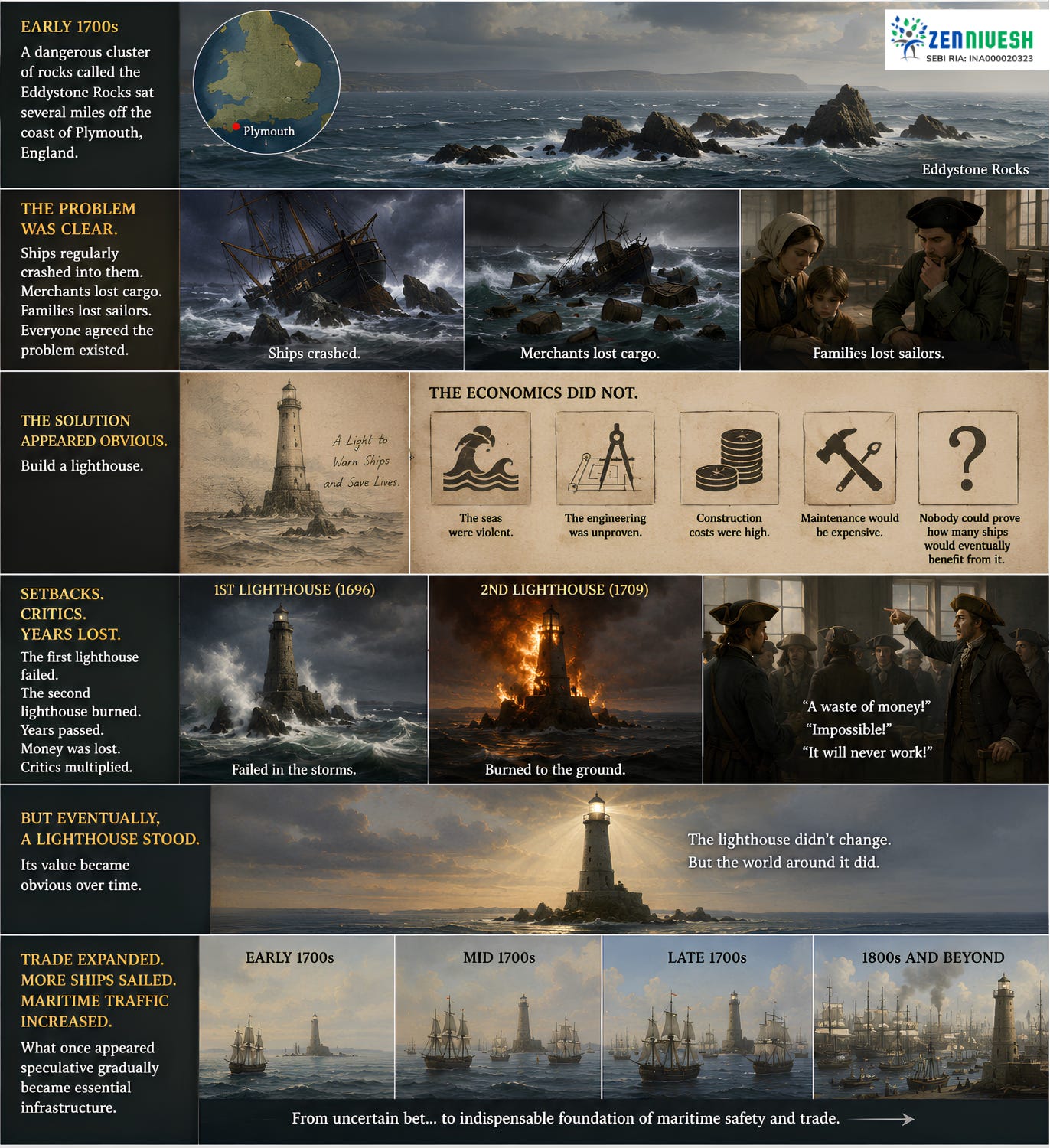
In the early 18th century, a dangerous cluster of rocks called the Eddystone Rocks sat several miles off the coast of Plymouth, England. Ships regularly crashed into them. Merchants lost cargo. Families lost sailors. Everyone agreed the problem existed. Yet for years, very few were willing to invest the enormous time, capital, and effort required to solve it. The solution appeared obvious. Build a lighthouse. The economics did not permit it. The seas were violent. The engineering was unproven. Construction costs were high. Maintenance would be expensive. And perhaps most importantly, nobody could prove how many ships would eventually benefit from it. The first lighthouse failed. The second lighthouse burned. Years passed. Money was lost. Critics multiplied. But eventually a lighthouse stood. Its value became obvious over time. The lighthouse didn’t change. But the world around it did. Trade expanded. More ships sailed. Maritime traffic increased. What once appeared speculative gradually became essential infrastructure.
I want you to keep the story above in mind as you read about Max India.
Today, when you look at Max India, you see Antara, senior living, care homes, AGEasy, and healthcare services. But the story of Max India did not begin with Antara. It began more than four decades ago. Over the years, Max has displayed a peculiar tendency. It has often entered sectors long before they became obvious.
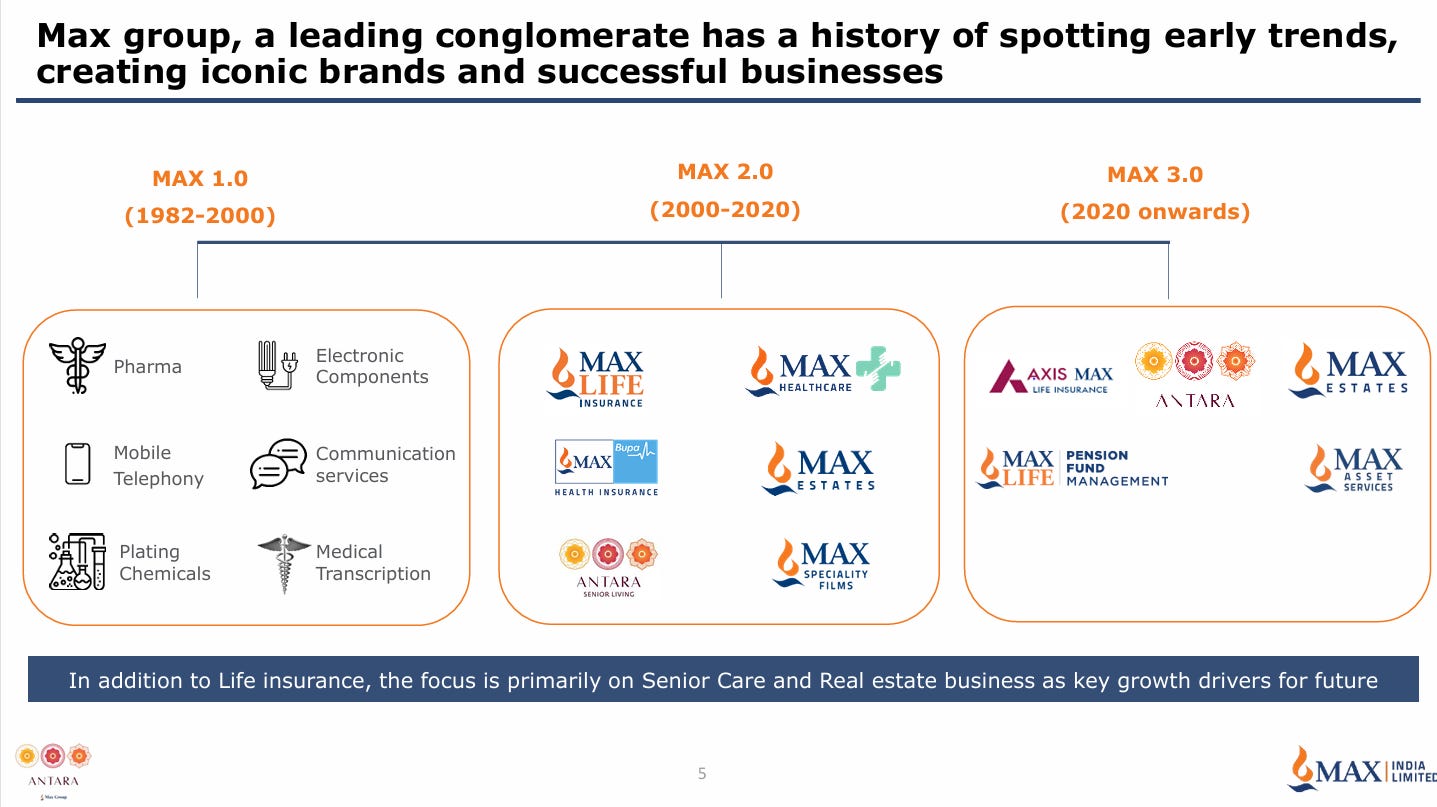
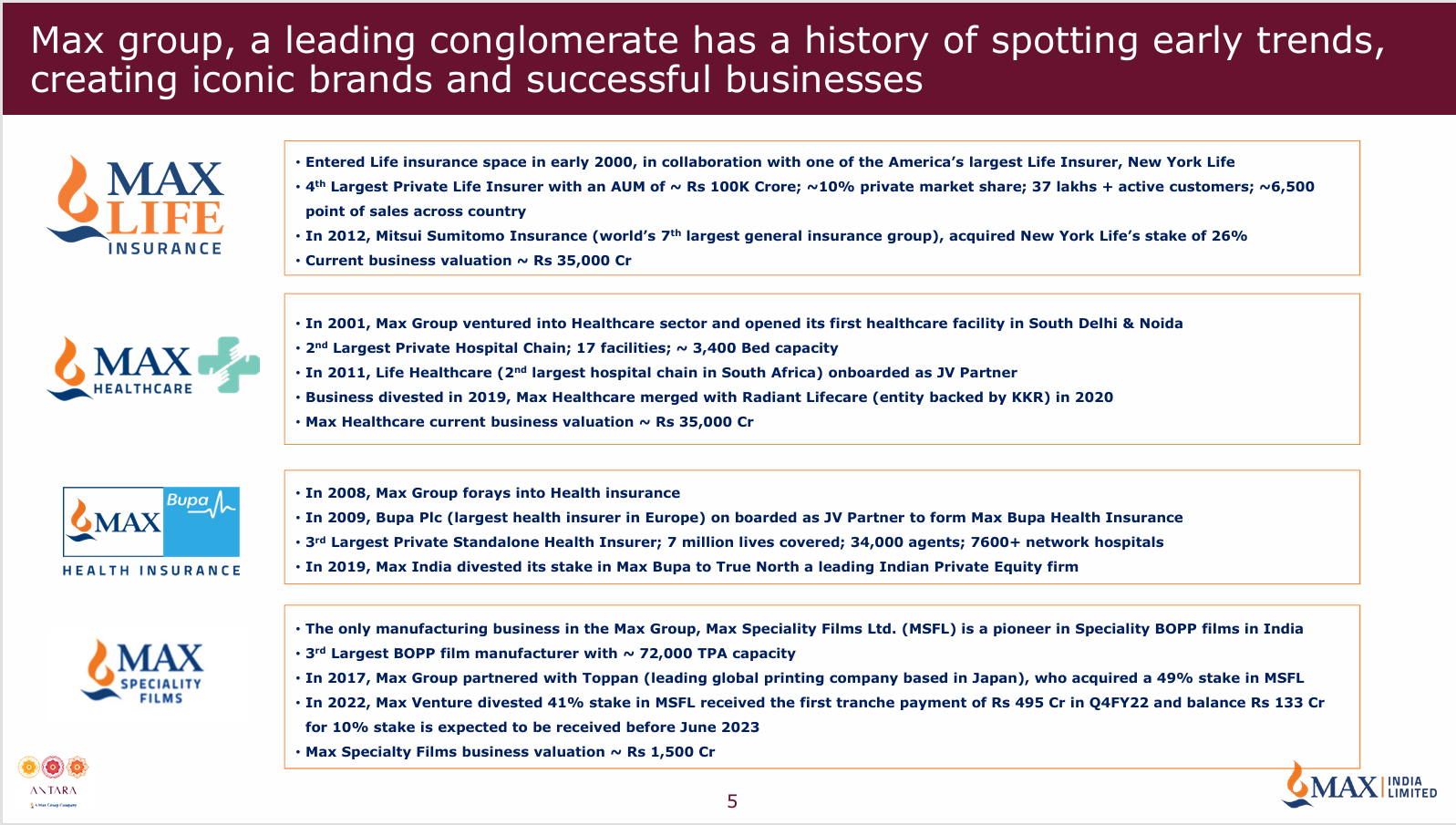
In the 1980s, it started with pharmaceuticals and manufacturing. In the early 1990s, it entered telecom when mobile phones were still a luxury. In the early 2000s, it entered life insurance shortly after private participation was allowed. Around the same period, it entered private healthcare when organized hospital chains were still in their infancy. It later entered health insurance. And long before aging became a mainstream investment theme, it began exploring senior care through Antara.
These businesses are unrelated. Telecom has little in common with hospitals. Hospitals look very different from insurance. Insurance appears far removed from senior living. Yet a common thread runs through all of them. Max repeatedly attempted to build businesses around large societal shifts that were visible before they became obvious. The sectors evolved over time. The underlying philosophy remained remarkably consistent.
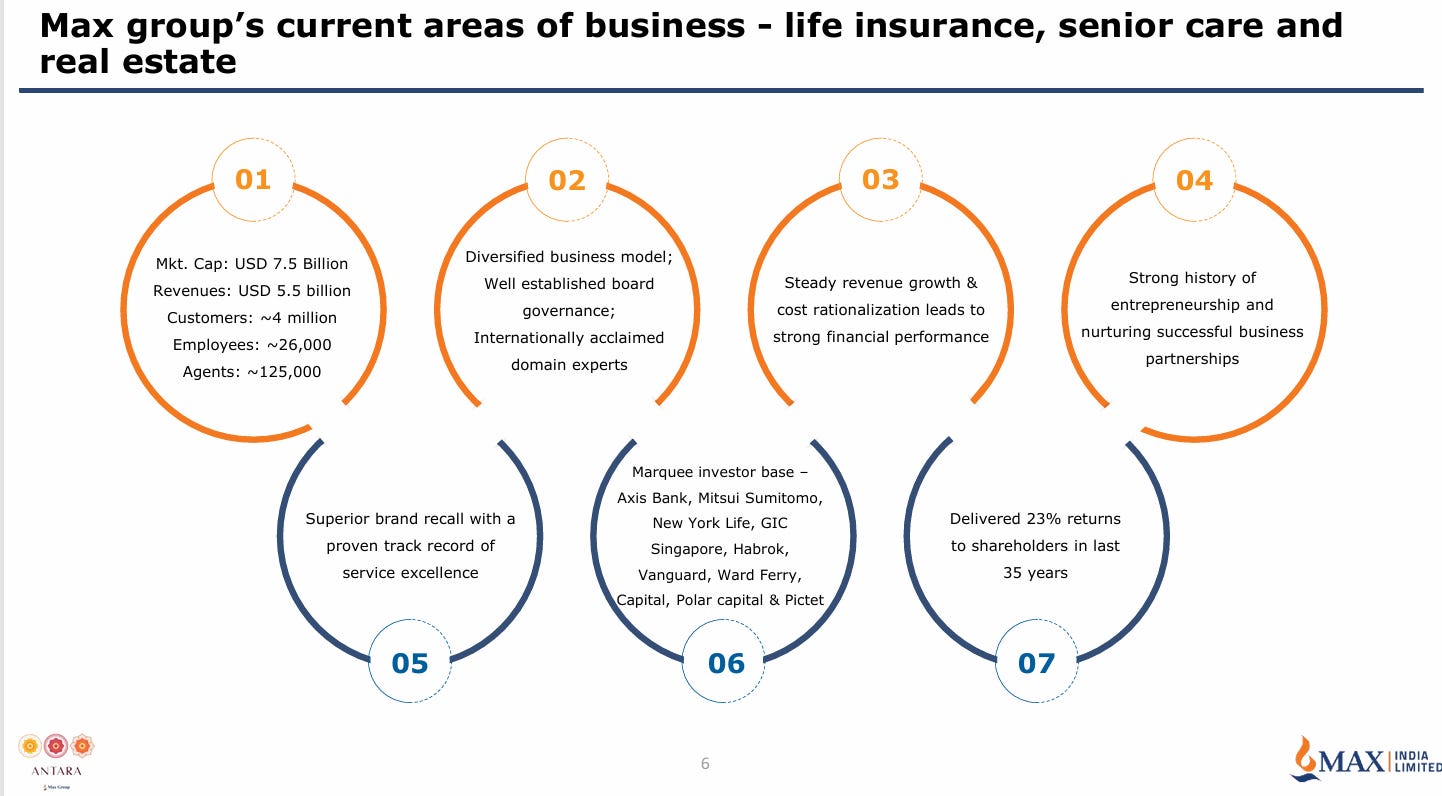
The current Antara story is therefore not an isolated bet. It is the latest expression of a pattern that has existed within the Max Group for decades. Telecom, private healthcare, life insurance, and health insurance were all once emerging opportunities. Today, management believes organized senior care may be the next such opportunity.
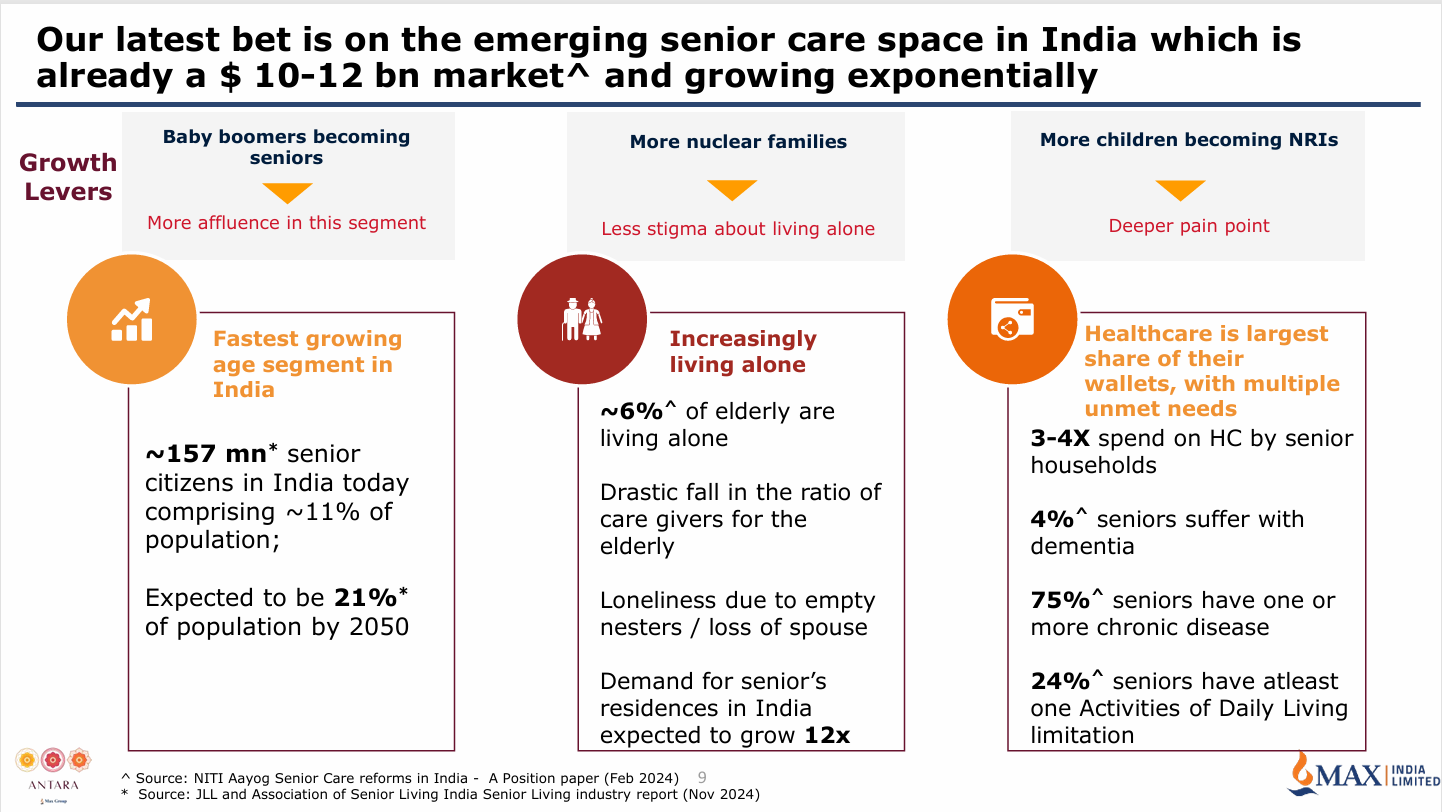
Whether that belief ultimately proves correct remains unknown. But understanding Max India requires understanding this continuity. Antara is simply the latest chapter in a story that began decades earlier. A story about identifying emerging categories. Building before demand becomes obvious. Enduring periods of skepticism. Recycling capital from mature businesses into new opportunities. And repeatedly attempting to build infrastructure for a future that has not yet fully arrived. Viewed through that lens, the journey from pharmaceuticals to telecom, from telecom to insurance, from insurance to healthcare, and from healthcare to senior care no longer appears disconnected.
They look like different sections of the same lighthouse. Each generation added another layer. Each business added another stone. Some businesses became category leaders. Some were monetized. Others were restructured into new forms. Each phase added another layer to the Max story. Together, they tell the story of a group that has spent four decades trying to build ahead of the curve. What follows next is an attempt to understand that journey. From the first stone. To the latest lantern. One milestone at a time.
I have divided the whole journey of Max India, spanning over four decades, into 5 phases. Let’s look at them one by one.

Phase I (1984–1999)
Learning to Spot the Tide Before Others
Every long journey has a period that appears unremarkable in hindsight. For Max, that period began in 1984. At the time, our country, India, looked very different from what it is today. Economic liberalization was still years away. Consumer industries were underdeveloped. Private capital was limited. Many of the sectors that dominate today’s economy barely existed in their current form. Max began as a pharmaceutical and manufacturing business. There was nothing particularly glamorous about it. Yet this period planted an important seed. It taught the organization how to identify structural trends before they became mainstream. That lesson would become one of the defining characteristics of the group. The first major expression of this philosophy emerged in the early 1990s. India was opening up. Telecom was still a luxury. Mobile phones were expensive. Network coverage was limited. Many people viewed mobile communication as a niche product for wealthy businessmen. Max saw something else. It saw the possibility of a country that would eventually become connected. The creation of Hutchison Max Telecom was more than a business decision.
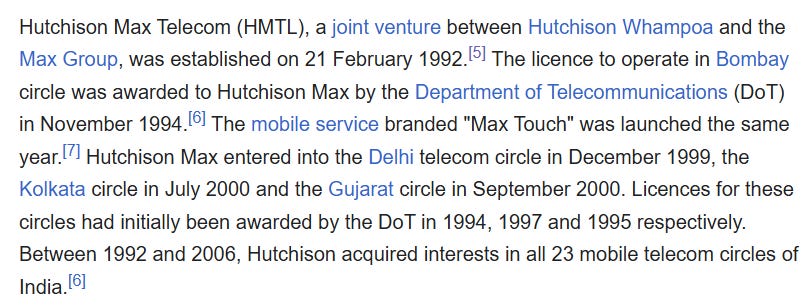
It was the group’s first large-scale bet on a societal shift that had not yet fully arrived. Looking back today, mobile telephony feels inevitable. At the time, it was anything but. This would become a recurring theme throughout the Max journey. The opportunity would appear obvious only after it had already been built.
Phase II (2000–2010)
Betting on Protection and Health
By the turn of the millennium, the telecom experiment had already demonstrated something important. The biggest opportunities often emerge when an industry is still in its infancy. The next wave appeared in two sectors that touched nearly every household. Protection. And health. In 2000, India opened the insurance sector to private participation. Today, life insurance is an accepted part of financial planning. At that time, private life insurance barely existed. Max entered through Max Life. The logic was simple. As incomes rise, people seek financial protection. As financial awareness improves, insurance penetration rises. The category was small. The direction of travel was clear. Around the same period, another opportunity was taking shape. Private healthcare. India’s healthcare infrastructure was growing, but organized hospital chains were still rare. Healthcare was fragmented. Standards varied widely. Demand for quality healthcare was rising faster than supply. Max Healthcare emerged from this backdrop. Once again, the company was entering a category before it had become obvious. What followed over the next decade was the gradual building of two powerful franchises. One protected lives. The other treated them. Both were built around the same underlying reality. India was becoming wealthier. And wealthier societies spend more on health and protection.
Phase III (2010–2020)
Building Scale and Discovering Aging
By the beginning of the next decade, Max had evolved far beyond its manufacturing roots. Telecom had matured. Insurance was scaling. Hospitals were expanding. The group had already demonstrated its ability to build category-leading businesses. This phase was less about entering new industries and more about building scale. Max Healthcare expanded across NCR and neighboring regions. Max Life strengthened its position within the life insurance industry. Health insurance partnerships added another layer to the healthcare ecosystem. Viewed from the outside, the group appeared to be firmly focused on healthcare and financial services. Yet beneath the surface, another idea was beginning to emerge. A much quieter idea. Aging. India was still celebrated for its youth. The demographic dividend dominated public conversations. Few people were paying attention to what would happen decades later. The seeds of Antara were planted during this period.
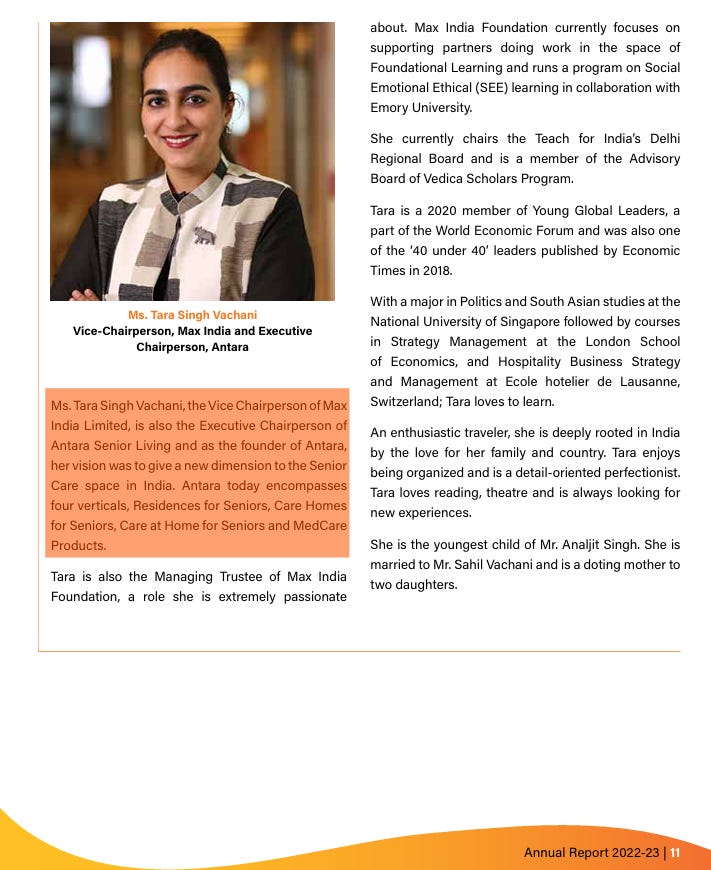
The original vision was not simply to create retirement housing. The vision was to rethink what aging could look like in India. The first senior-living initiatives emerged in Dehradun. At the time, the concept appeared unusual. Indian families traditionally cared for elderly parents at home. The idea of organized senior living felt foreign to many people. But demographic trends were already moving. People were relocating. Families were becoming smaller. Life expectancy was increasing. The need existed. The market simply had not recognized it yet. By the end of this phase, another important development occurred. The group began simplifying itself. Healthcare, insurance, and senior care were all valuable businesses. But they were housed inside increasingly complex structures. A major restructuring followed. And with that restructuring, the next chapter of the story began.
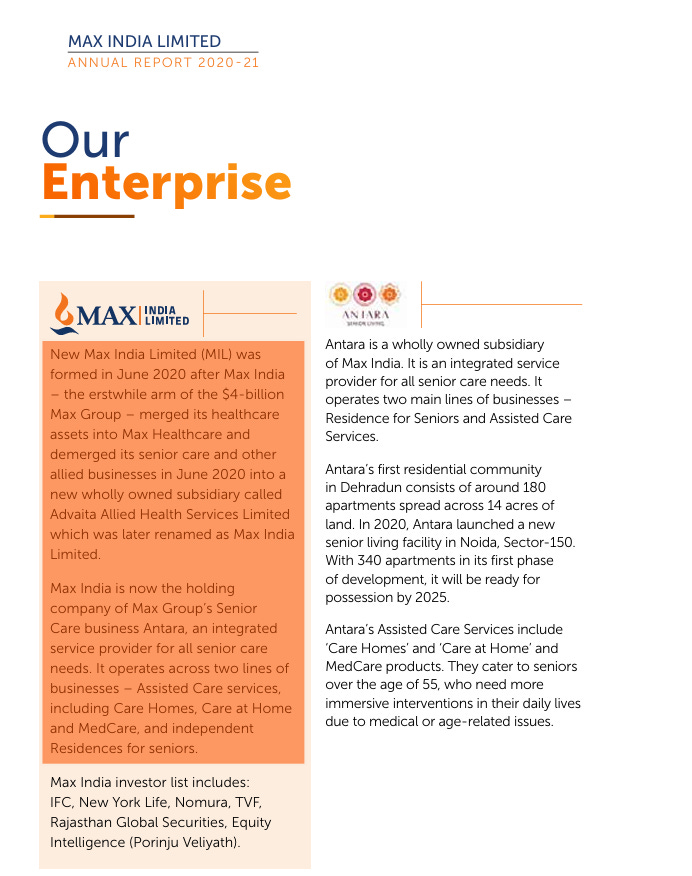
Phase IV (2020–2023)
The Discovery Years
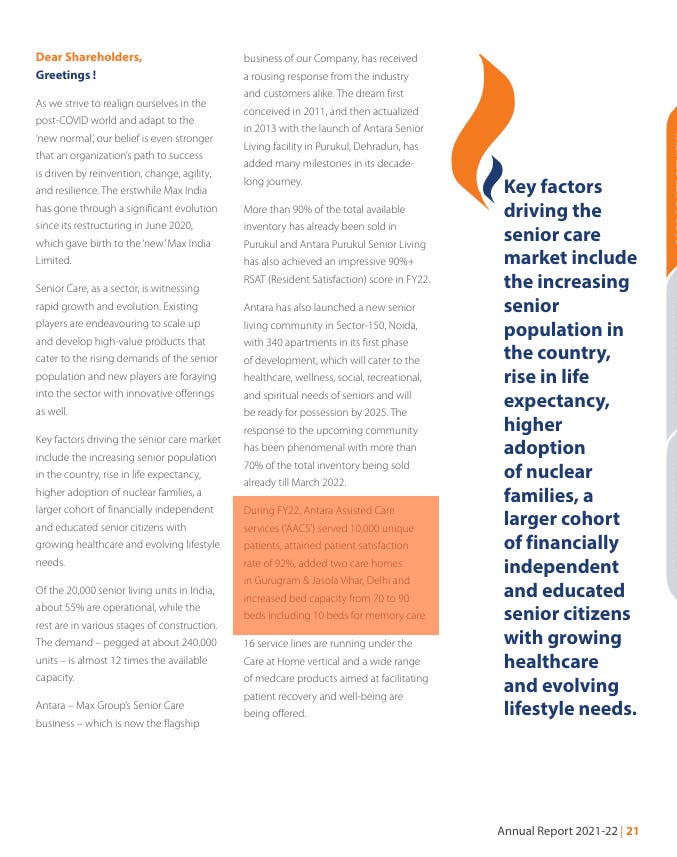
When the current Max India emerged after the restructuring, the company possessed something valuable but also something dangerous. It had conviction. Management believed aging would become one of India’s most important long-term themes. The danger was that conviction alone does not create a business. The company still needed evidence. The years immediately after the restructuring therefore became a period of discovery. The company was not merely building projects. It was running experiments. In Dehradun, it was seeing a laboratory.
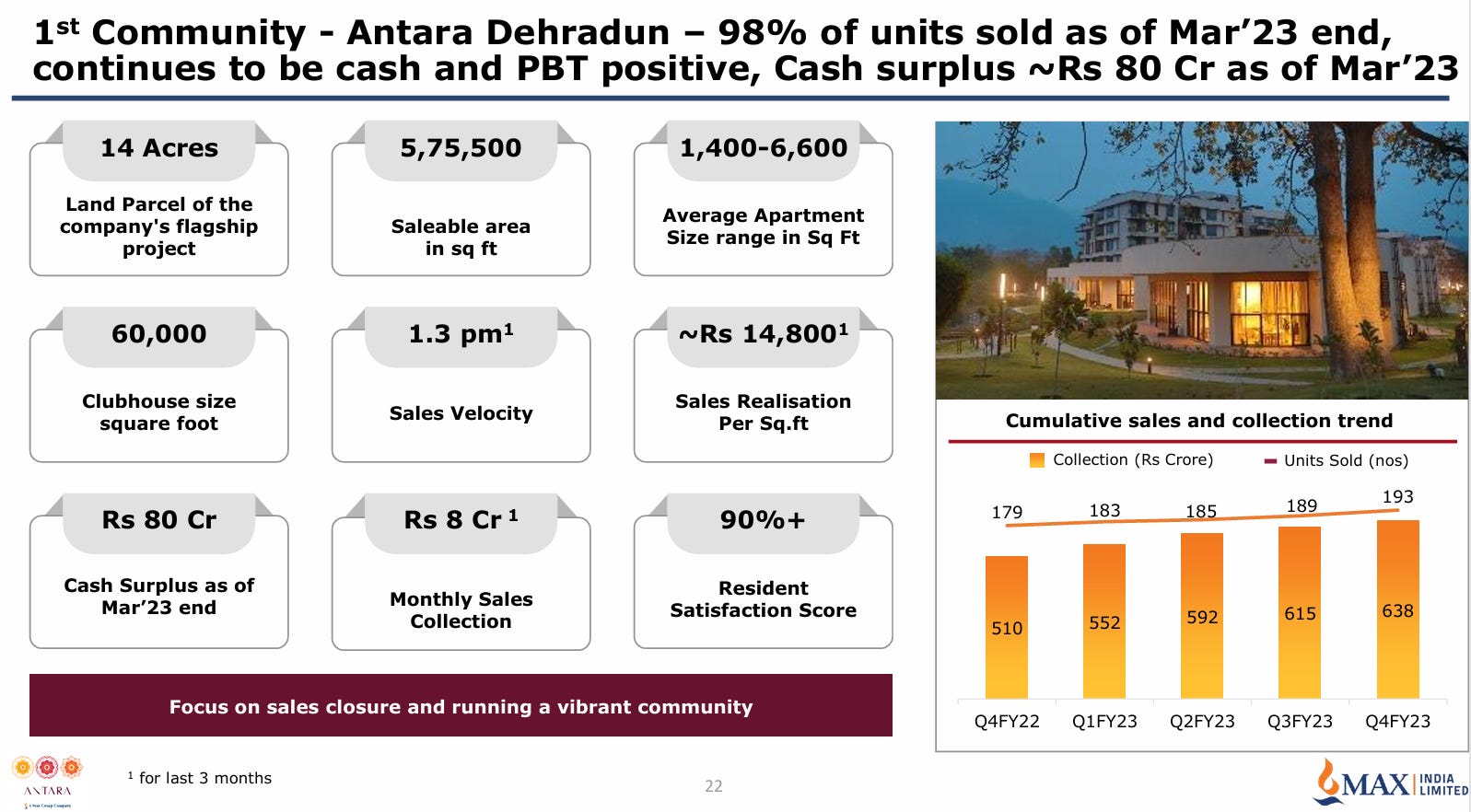
Every resident who moved into Dehradun generated information. How do affluent Indian seniors make decisions? Who influences those decisions? Do they move because of healthcare concerns? Do they move because of loneliness? Do they move because their children live elsewhere? Which services are used most often? Which services are rarely used? What causes satisfaction? What causes dissatisfaction?
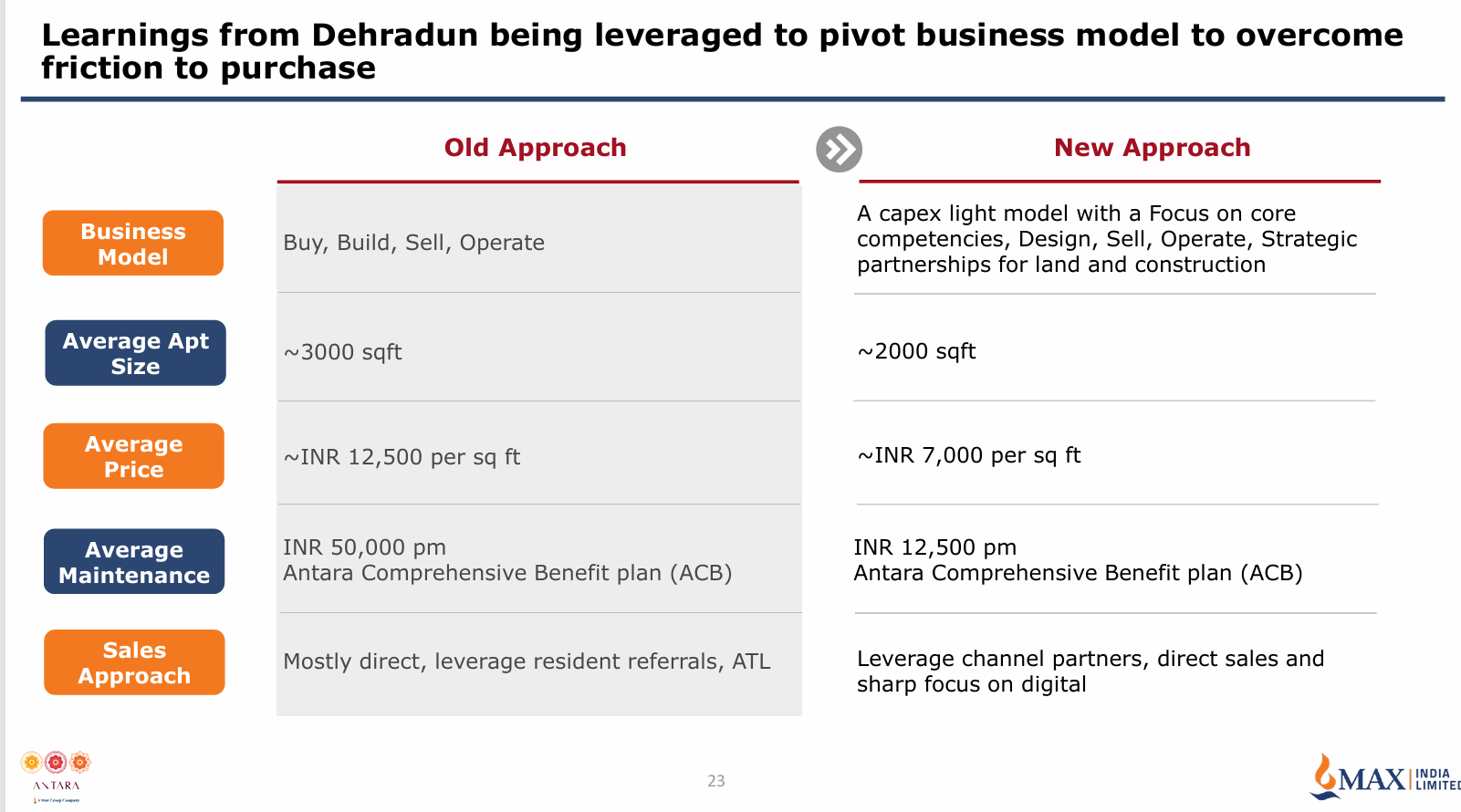
The company was collecting answers to questions that had never been studied systematically in India before. As Dehradun matured, one insight started becoming increasingly clear. The apartment was not the product. The apartment was the entry point. The real customer need extended far beyond housing. A resident might initially arrive because of the residence. But over time, the relationship increasingly revolved around healthcare, wellness, safety, community, and support. The company had initially approached the opportunity through the lens of real estate. Dehradun gradually forced it to view the opportunity through the lens of aging.
That may sound like a small shift. It wasn’t. A housing business has a transaction. An aging business has a lifetime relationship. One apartment can only be sold once. The needs associated with aging continue for decades. The implications of this discovery slowly began to influence MAx India’s priorities and decisions.
Around the same time, Noida was generating a second important insight. Dehradun had proven acceptance. Noida was testing aspiration. Many observers initially believed senior living worked because Dehradun was a retirement destination. That explanation became harder to sustain as Noida sales accelerated.
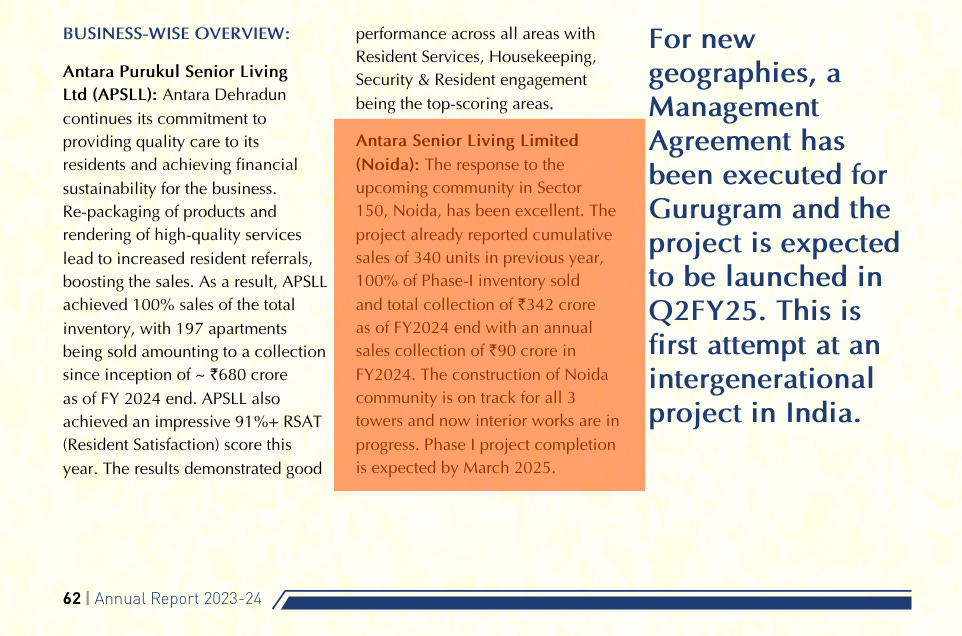
Customers were not simply buying a peaceful location. They were buying confidence. Confidence that healthcare would be available, maintenance would be handled, emergencies would be managed, and aging would not be a liability. The success of Noida dramatically expanded management’s perception of the opportunity. Senior living was no longer a niche product for retirees seeking scenic locations. It could potentially become relevant across large urban centers as well. While these discoveries were unfolding, another realization was quietly emerging. Not every senior wants or needs a residence. But they need care. Some need rehabilitation. Some need memory care. Some need post-operative support. Some need assistance for only a few months. Others require assistance for many years. The elderly population was not one market. It was several distinct markets hidden within a single demographic category.
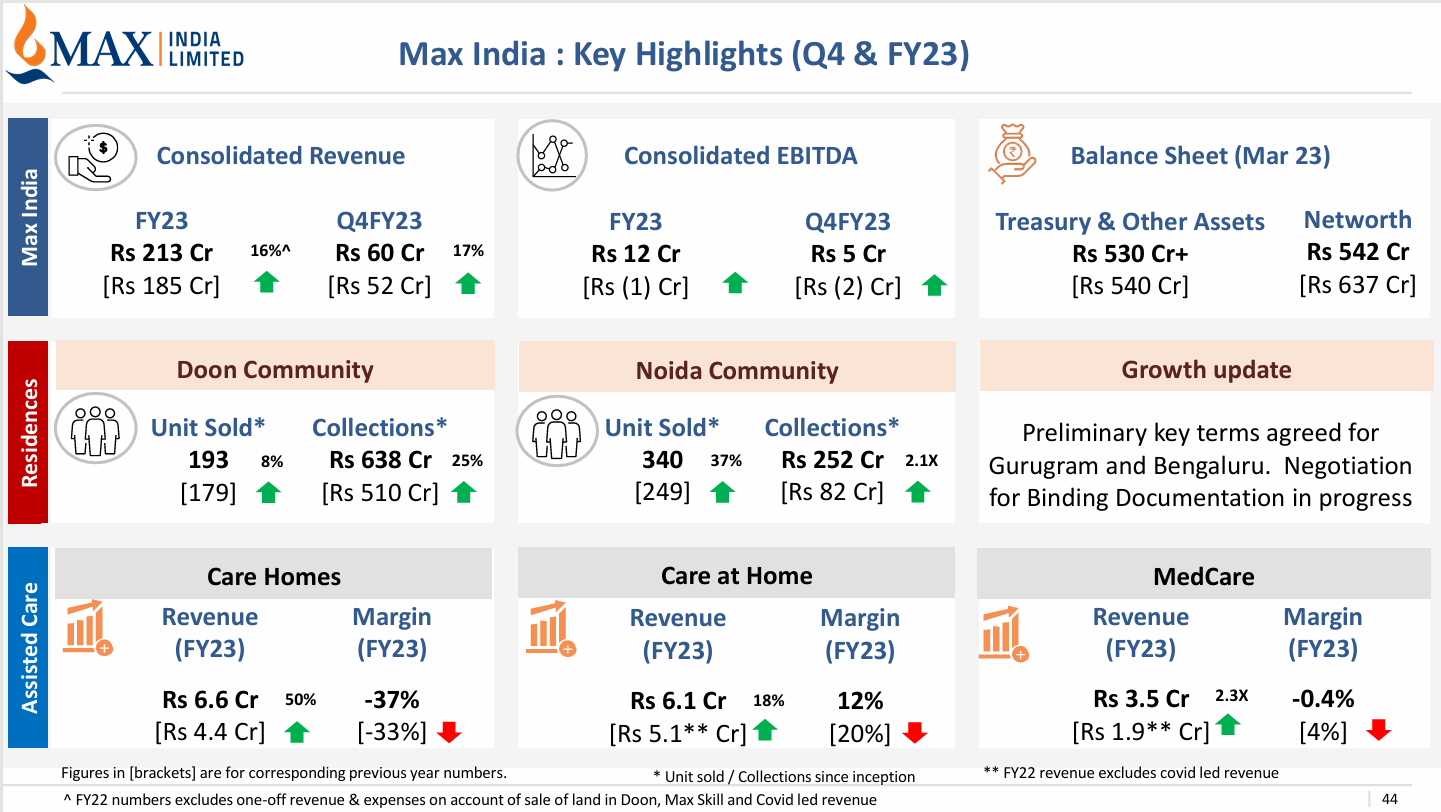
This insight eventually gave birth to Care Homes. Initially, Care Homes appeared as a supporting service. Over time, management began to recognize that Care Homes might represent an opportunity as significant as the residences themselves. From “how many residences can we sell?” management moved to “how many aging-related needs can we solve? That shift was perhaps the most important development of the FY21–FY23 period. The company entered the period trying to validate senior living. It exited the period trying to understand aging itself.
Phase V (2024–Present)
The Ecosystem Years
Once management accepted that the opportunity was larger than housing, a new challenge emerged. How do you organize a business around aging? Unlike insurance, aging is not a single product. Unlike hospitals, it is not a single service. Unlike real estate, it is not a single transaction. It is a journey. And journeys require ecosystems. This realization defines the current phase of Max India’s evolution
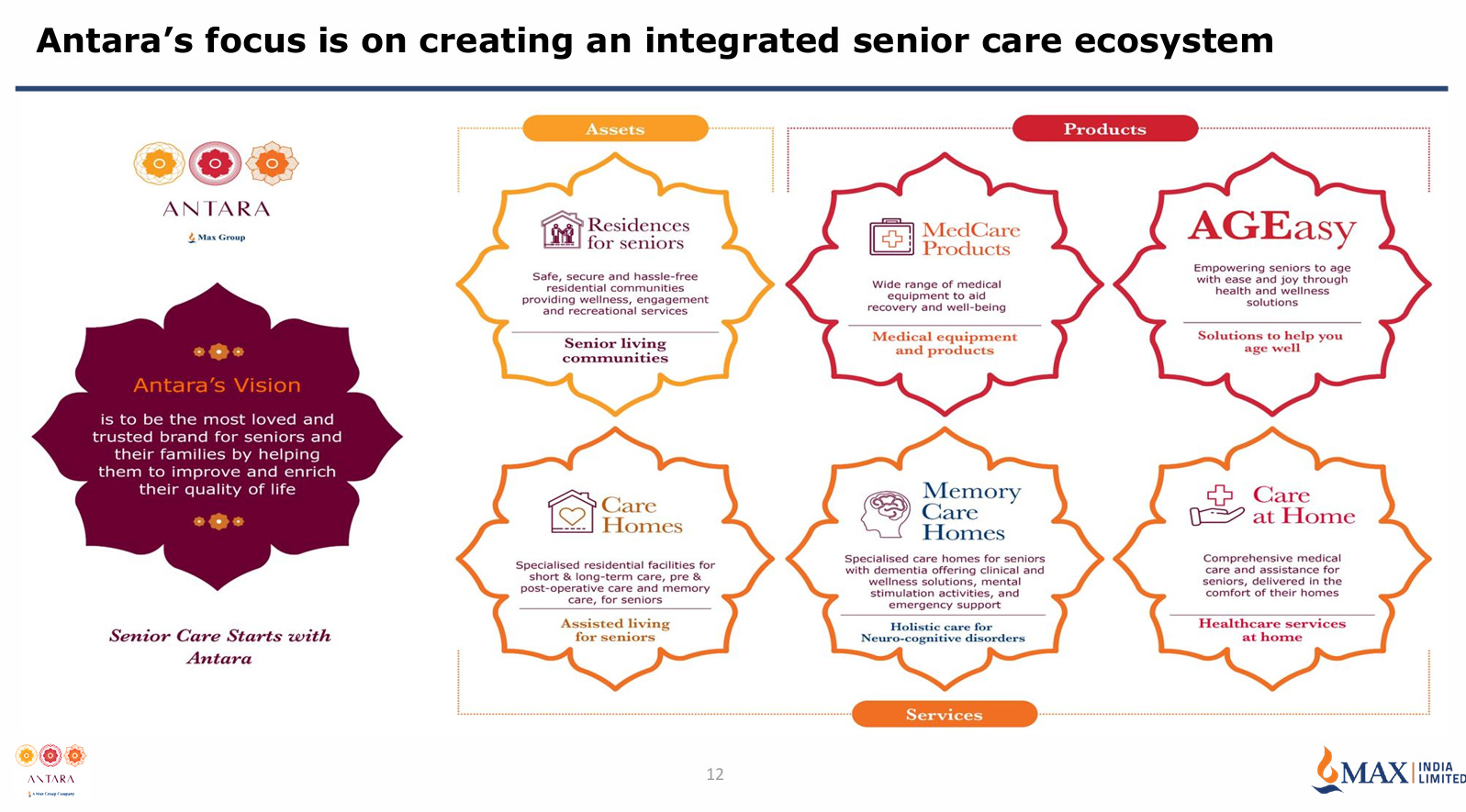
The company stopped organizing itself around business lines. It started organizing itself around the customer. Antara increasingly seems to ask, “What happens to a person as they age?” The answer naturally leads to multiple needs. A healthy sixty-year-old may need wellness products. A seventy-year-old may need preventive healthcare. A seventy-five-year-old may need physiotherapy. An eighty-year-old may require assisted living. Another person may need memory care. Someone else may need home healthcare. Viewed this way, the aging journey does not begin with a residence. It begins much earlier.
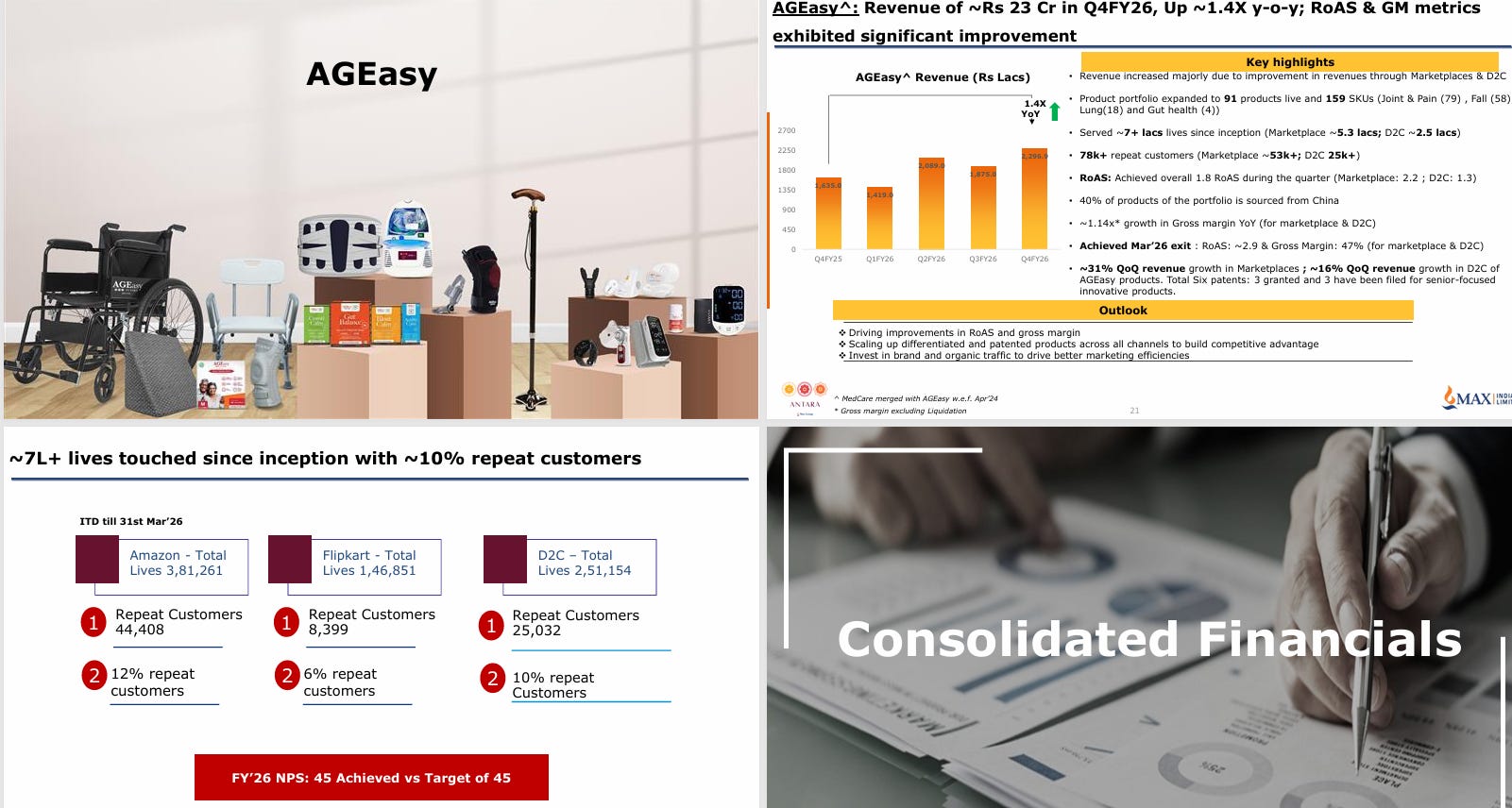
This realization explains AGEasy. AGEasy is an e-commerce business. And more. Management increasingly treats it as something more strategic. AGEasy creates relationships before intensive care is required. A customer may purchase a blood pressure monitor today. A mobility aid next year. A respiratory product later. The revenue generated from those products is valuable. The relationship created is potentially far more valuable.
For the first time, Antara could interact with seniors who might never move into one of its residences. The addressable market expanded dramatically. The company was no longer limited to the residents living inside its communities. AGEasy effectively became the outer edge of the ecosystem. The first touchpoint.
Care at Home represents another important evolution. Historically, healthcare often required people to travel toward infrastructure. Care at Home reverses that relationship. Infrastructure travels toward people. This is particularly important in aging. Many seniors want support. Fewer want disruption. The ability to deliver care within familiar environments increases both convenience and trust.
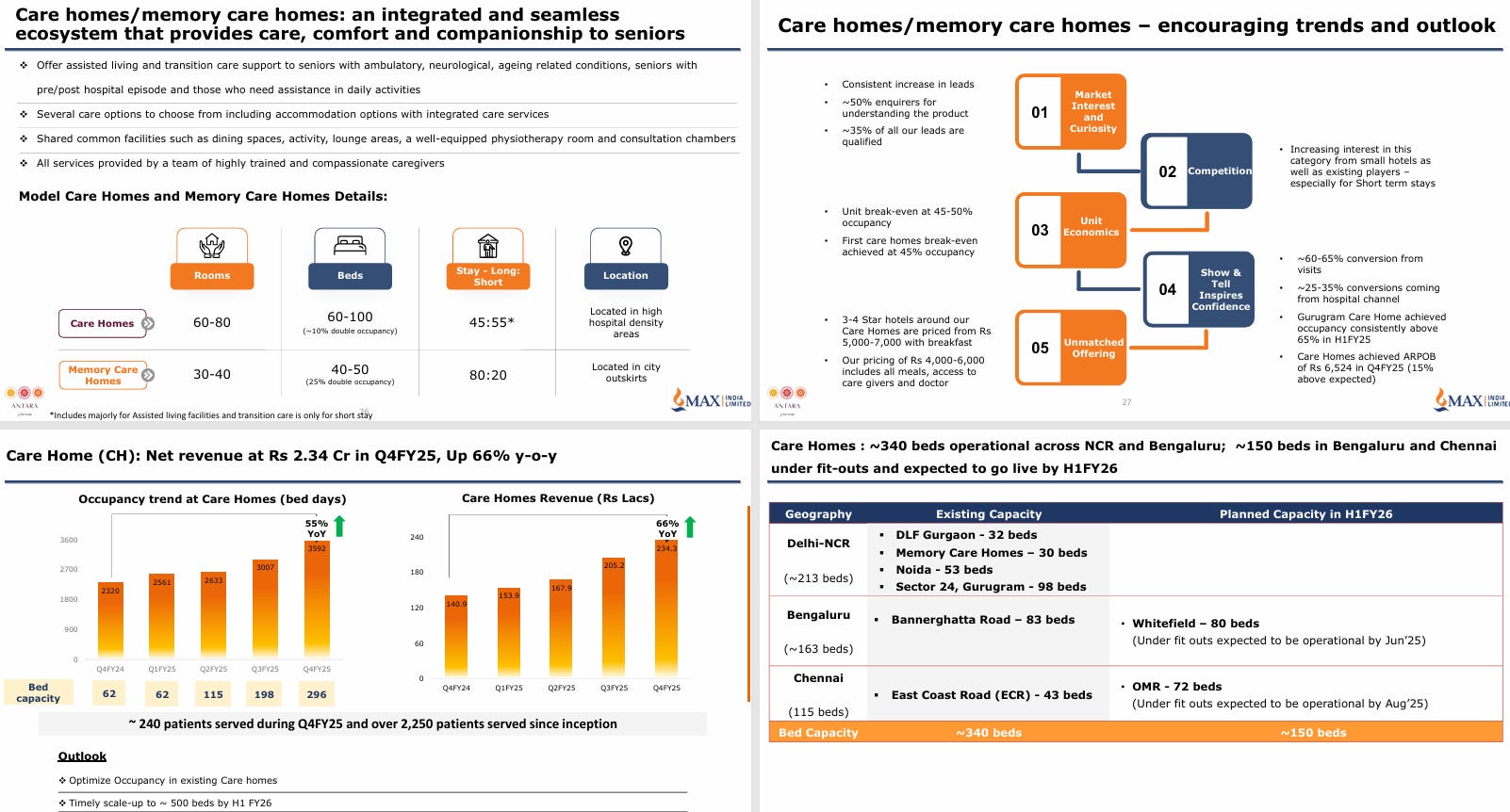
Care Homes emerged from a different insight. As management gained more experience, it became increasingly clear that a meaningful segment of the elderly population required support that families could not always provide. It is not that families cared less. Just that modern life had changed. Daughters and sons lived elsewhere. Care requirements had become more specialized. Life expectancy had increased. Medical complexity had increased. The demand for assisted care was gradually becoming structural.
This is why Care Homes occupy such an important position in the ecosystem. They address needs that neither residences nor home care can fully solve. The evolution of the residential business also reflects management’s learning process. Dehradun proved acceptance. Noida proved urban scalability. Estate 360 proved repeatability. Estate 361 is now testing whether repeatability can evolve into a system.
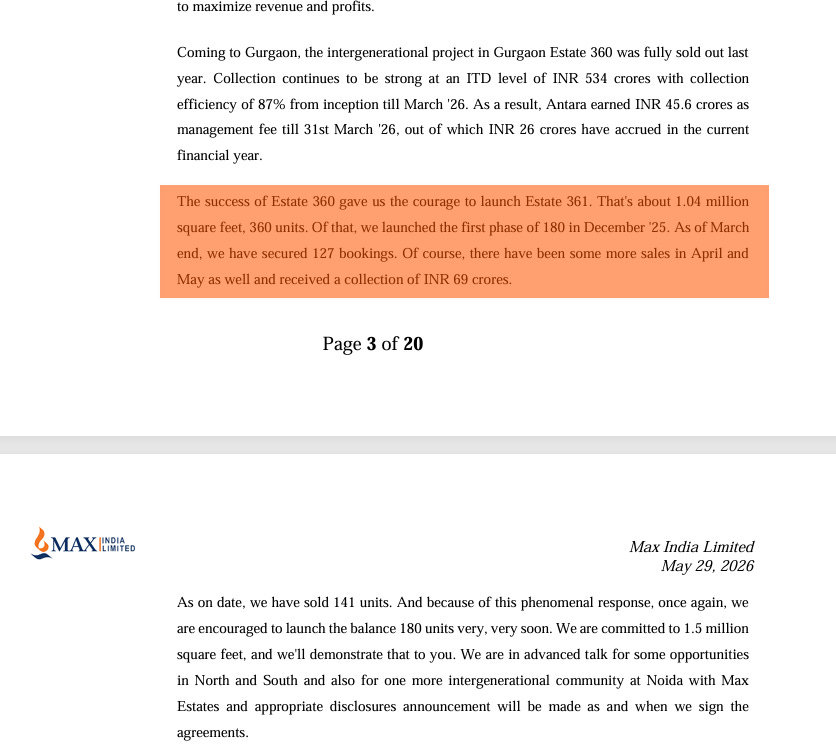
Every phase answered one question and created a more sophisticated one. The same pattern appears across the broader business. Care Homes are no longer being evaluated simply on capacity. The focus has shifted toward occupancy, contribution margins, and operating leverage. AGEasy is no longer being evaluated simply on revenue. Attention is shifting toward repeat customers, gross margins, and customer-acquisition economics. The ecosystem is beginning to move from growth metrics toward efficiency metrics. That transition is significant. It suggests the company is gradually moving from exploration toward optimization.
The most interesting aspect of the current phase is that management appears to be building something that very few organizations in India have attempted before. Some build residences. Some provide home healthcare. Some operate assisted-care facilities. Some sell products. Antara is attempting to connect all of them.
Whether that ultimately becomes a durable competitive advantage remains uncertain. But the ambition itself is unusual. And perhaps that brings us back to the lighthouse one final time. The first phase of the journey was about identifying the shoreline. The second phase was about understanding the currents. The third phase was about placing the stones. The current phase is about connecting the entire harbor. The ships are beginning to arrive. The real test now is whether the infrastructure built over the last several years can handle the traffic that follows.
Right Issues
Ambition needs funds before profits start accruing. Here are the details of the rights issue they did in 2025.
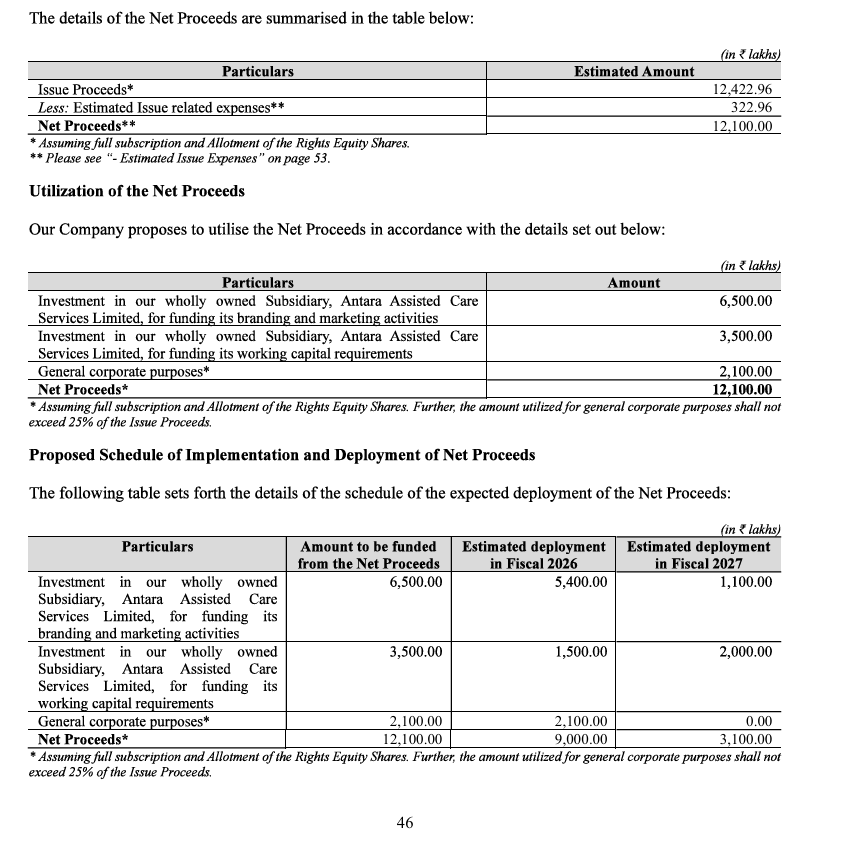
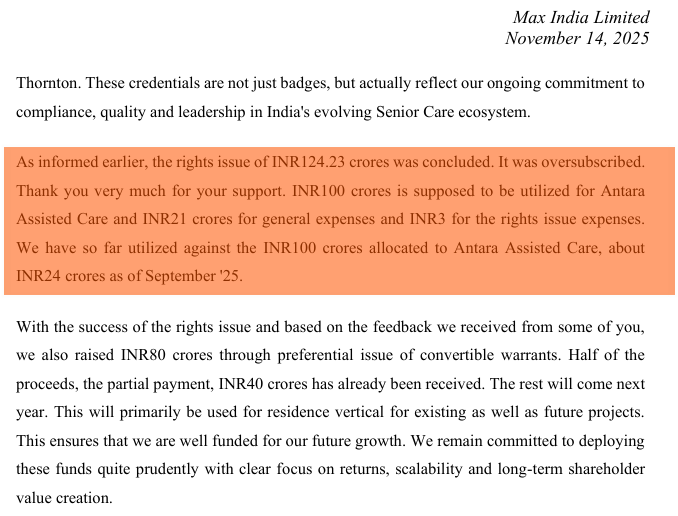
The rights issue received an encouraging response from investors. And some of them advised a preferential issue of a convertible warrantl.
An important metric for me to track would be whether these were one-off events or the management gets into the habit of using these financial weapons every 2-3 years. Because no investor likes frequent and consistent equity dilution.
Looking Back at the Lighthouse Before the Ships Arrive
When we began this journey, we started with a lighthouse. A structure built on dangerous rocks, in hostile waters, long before anyone could prove how many ships would eventually pass by. At the time, the economics looked questionable. The costs were visible. The benefits were uncertain. The critics were easy to find. The beneficiaries were harder to identify. Only with the benefit of hindsight did the logic become obvious. The lighthouse didn’t change. But the world around it did.
As I reflect on Max India’s journey, I find myself returning to that image. Max India is not yet a successful lighthouse. It is still being built. As of June 2026, some pieces of the puzzle appear encouraging. Dehradun has validated organized senior living. Noida has demonstrated that the model can work in a large urban market. Estate 360 has shown that the model may be repeatable. Care Homes are expanding. Care at Home is scaling. AGEasy is reaching hundreds of thousands of seniors. The ecosystem is becoming broader with every passing year.
Yet despite all this progress, many of the questions that matter most remain unanswered. Will Care Homes eventually achieve the occupancy levels management hopes for? Will AGEasy become a profitable, sustainable consumer business?
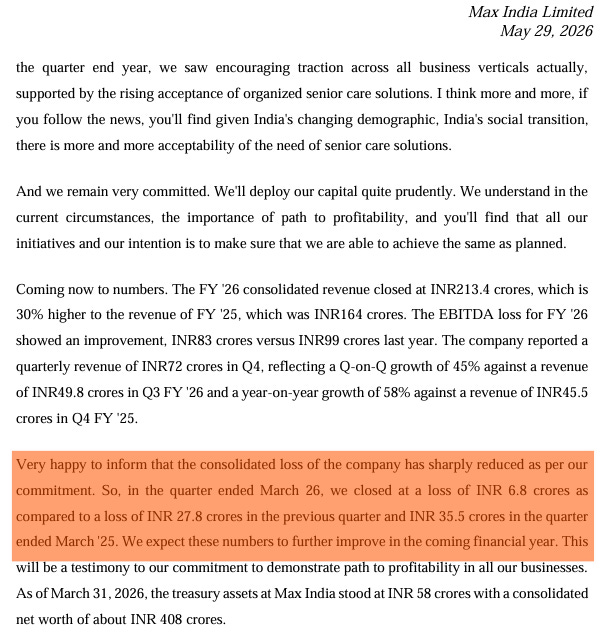
Will the various pieces of the ecosystem strengthen one another as management expects? Will the business eventually generate the operating leverage that seems possible today? Will organized senior care become a mainstream category in India or remain a premium niche?
The truth is that nobody knows. And perhaps that is exactly the point. If all of those questions were already answered, the opportunity would look very different. The lighthouse would already be standing. The ships would already be arriving. The economics would already be visible. The uncertainty would already be gone.
But investing rarely works that way. Especially in the microcap world. The businesses that eventually become obvious often look confusing when they are being built. They usually arrive disguised as incomplete stories with missing pieces and unanswered questions where the future is visible only in fragments.
Max India feels like one such story. It is still loss-making. Its ecosystem is still evolving. Its scale is still modest relative to its ambitions. The final shape of the business remains unknown.
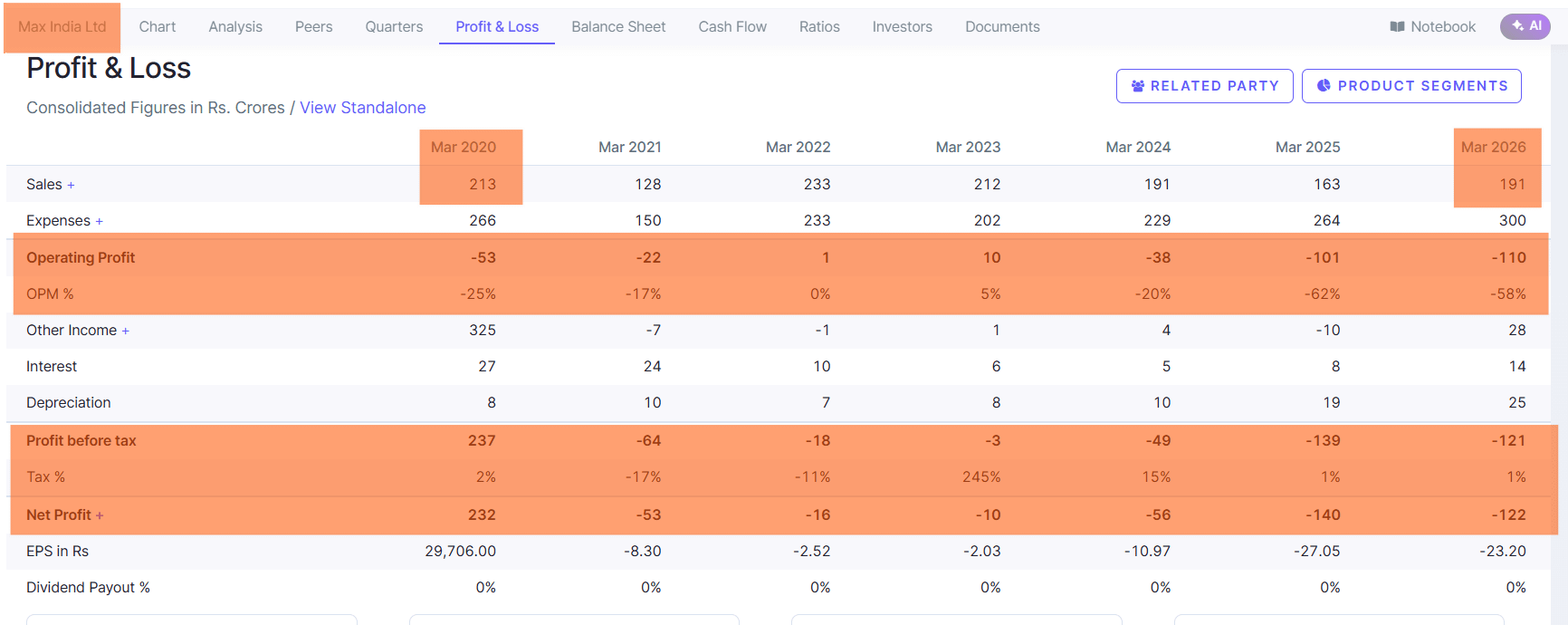
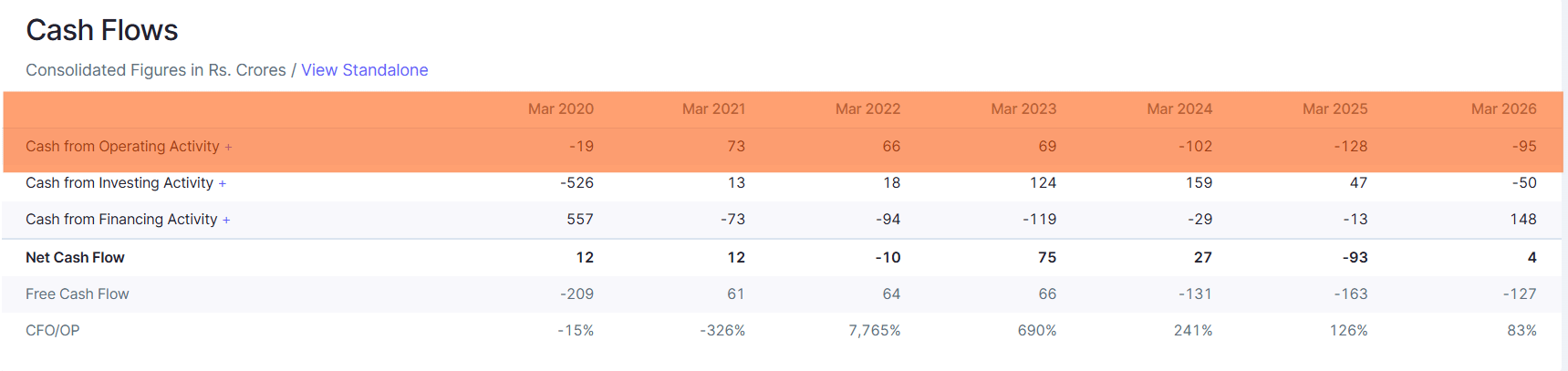
Yet beneath that uncertainty sits a question that I find difficult to ignore. What happens if India ages exactly as the data suggest it will? What happens if smaller families become more common? What happens if people continue moving away from their hometowns? What happens if healthcare needs continue becoming more specialized? What happens if aging itself becomes one of the defining societal themes of the next two decades? And perhaps most importantly: What happens if organized senior care becomes an essential service rather than an optional one?
I do not know the answers. And I guess neither does the market. As investors, our job is not to predict the future with certainty. Our job is to identify situations where the future could look very different from the present.
Microcap investing often requires studying the lighthouse while the stones are still being placed. It requires understanding the shoreline before the harbor becomes busy. It requires paying attention when the future is still being quietly constructed. That does not mean every lighthouse will succeed. Some will fail. Some will never attract enough ships. Some will be built in the wrong location. The risk is real. But so is the opportunity. The lighthouse is still under construction. The ships have not fully arrived. For now, that is enough for me to keep Max India on my watchlist and track closely as the next chapter unfolds.
Thanks for reading.
 | A guest post by
|
nicely described
Looks Good. Will find good entry levels for best risk rewards.